
Asian Grooming for Toy Poodles 😄
Let’s be honest: it is almost impossible that you have never heard about Asian grooming by now.
You have probably seen it already.
You may even have tried it on your own dog.
And this is usually how the classic scene goes:
You arrive at the grooming salon.
The groomer asks:
— Shaved face or fluffy face?
— Asian style?
— Perfect. Come back in an hour. 😄
And why does this happen?
Because “Asian style” grooming does not have one single clear system of names or exact shapes. Every groomer interprets the style in their own way.
And honestly… many groomers start the session without fully knowing how the final haircut will end up looking. 😄
So… are all those completely different looks simply called “Asian grooming”?
Well… not exactly.
There is some general classification.
Theoretically, we have styles such as:
🐻 Teddy Bear
🪆 Doll Face
🐑 Lamb Style
🦝 Raccoon Style
☁️ Cloud Style
🌀 Natural Curly Look
But those are more like general concepts than strict technical blueprints.
Because my “teddy bear” and your “teddy bear” may look like two completely different species. 😄
And this is where things become fun.
On this page, we are going to take the Toy Poodle apart “piece by piece”:
heads, legs, tails, ears, faces, volumes, lines…
And then you can put everything back together however you like.
Afterwards, you can tell me what creature you ended up creating. 😄
One time, I attempted to make a haircut inspired by a little polar bear…
and somehow it turned into a style I now call:
👉 “mother-in-law.”

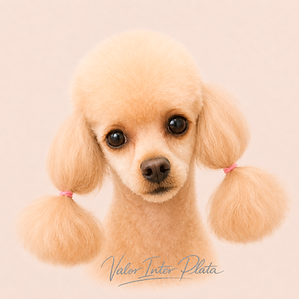
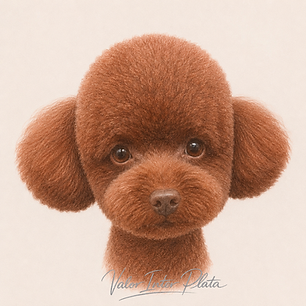
Toy Poodle Heads ✂️
Asian Grooming, Teddy Bear Faces, Round Heads, and Other Perfectly Legal Experiments 😄
And now we arrive at probably the most dangerous part of Asian grooming for the human brain: the heads.
Because yes… technically we are talking about “Toy Poodle haircuts.”
But in reality, we are talking about:
Asian grooming,
teddy bear cuts,
round faces,
baby face styles,
doll faces,
Korean style grooming,
Asian faces,
puppy looks,
living teddy bears,
and about forty more variations that the internet insists are “completely different.” 😄
The truth is that just the head of a Toy Poodle alone can have dozens of different shapes, proportions, and visual styles.
Rounder. Higher. Shorter. More expressive. More “baby.” More elegant.
More suspicious raccoon that just stole cookies from the kitchen.
And here is where things become fun: sometimes two groomers create exactly the same “Asian style”… and end up with two completely different dogs. Because an Asian-style head is not a fixed formula.
It is balance, proportions, coat texture, expression… and a tiny bit of grooming black magic. 😄
So in this section, we are going to take Toy Poodle heads apart piece by piece and see how each visual effect actually works.





Toy Poodle Legs 🐩
Pompons, Columns, Teddy Bear Legs, and Other Important Decisions for a Groomer’s Emotional Stability 😄
And after the heads… come the legs. That magical place where a Toy Poodle can transform into:
-a tiny elegant lamb, a teddy bear, a newborn deer, or an extremely expensive mop. 😄
Because yes: the shape of the legs dramatically changes the entire visual perception of the dog.
Straight legs → a more elegant appearance.
More volume → teddy bear effect.
Cylindrical legs → classic Asian grooming look.
Pompons → more fantasy and a stronger desire to brush them for three hours.
And here comes something wonderful: even using exactly the same head style,
the very same dog can look completely different simply by changing
the shape of the legs. That is why, in Asian grooming, legs are not “just legs.”
They are architecture. They are visual balance. They are optical illusion made
of curls. And sometimes they are also the exact moment when the groomer
discovers that the dog has decided to practice tap dancing during the session. 😄


