Circus Tricks for Dogs: Advanced Course for Teaching a Toy Poodle
Circus training is one of the most fun and stimulating ways to work with a Toy Poodle. It’s not just about teaching tricks — it’s about developing coordination, focus, and connection with your dog.
In a breed as intelligent as the Toy Poodle, this type of training is not just entertainment, but a form of learning and well-being.
What is circus training?
Circus training involves teaching the dog a series of movements and exercises that combine precision, balance, and coordination. It includes everything from basic tricks to more complex sequences.

These tricks require a solid foundation.
If your dog already masters the basics, now the fun part begins.

It’s not about doing tricks… it’s about enjoying time with your dog.
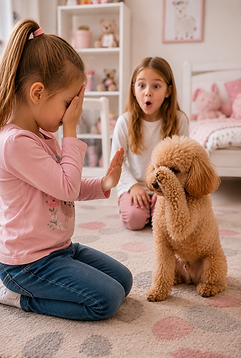
Shame – How to Teach a Dog the Trick of Covering Its Face with a Paw?
This trick teaches the dog to cover its face with its paw, as if it were feeling shy.It’s very eye-catching and one of the favorites in “circus” tricks. Objective: The dog should: lift its paw, touch its face, hold the position for a few seconds.
How to teach it step by step.
1. Place the dog in front of you. Choose a calm, quiet environment. 2. Use a small stimulus. You can use a small piece of paper or a soft sticker (like a Post-it), gently place it on the dog’s nose. 3. Wait for the reaction. The dog will try to remove it with its paw. 4. Mark and reward. As soon as the dog touches its face with the paw: say “Good!” and reward immediately.
5. Repeat several times. This helps the dog understand the movement. 6. Add the cue. Once the dog does it easily: say “shame”, just before the gesture. 7. Fade out the stimulus. Gradually remove the paper and perform the trick using only the cue.. Recommended signal: Recommended signal. Gesture: hand moving toward the face. How long to practise: Keep sessions short, with few repetitions, and stop when the dog does it well. ⚠️ Common mistakes: Placing something uncomfortable on the face → irritation. Forcing the paw → resistance. Repeating too much → loss of interest. Rewarding too late → confusion.Key tip: This trick works best with patience. At first, reward any attempt. Later, reward only the full movement.
Jump through a hoop.
This trick teaches the dog to jump through a hoop. It’s very visual, fun, and perfect for games and demonstrations. Objective:
The dog should: go through the hoop, jump with confidence, do it smoothly.

How to teach it step by step.
1. Start without jumping. Place the hoop on the ground or very low.
At first, the dog should simply go through it, not jump.
2. Use a treat.Guide the dog through the hoop with your hand.
3. Mark and reward. When the dog goes through: say “Good!” and reward immediately.
4. Repeat several times. This helps the dog understand that it should go through the hoop.
5. Start lifting the hoop. Very gradually: first just a few centimetres, then a little higher.
6. Add the cue. Once the dog does it well: say “jump” or “hoop”, just before the movement.
7. Increase the height carefully. Always keep it within what is comfortable for the dog. Recommended signal: Word: “jump” / “hoop”. Gesture: guide with your hand toward the hoop. How long to practise: Keep sessions short, with few repetitions, and always positive.
Common mistakes: Raising the hoop too quickly → fear or resistance. Forcing the jump → loss of confidence.
Repeating too much → fatigue. Unstable hoop → insecurity. Key tip: Confidence first, height later.
Walk on two legs.
This trick teaches the dog to stand up and walk on its hind legs. It’s very eye-catching and one of the most classic “circus” tricks.
Objective. The dog should: stand up on its hind legs, maintain balance, take a few steps.

How to teach it step by step.
1. Start from “sit”. The dog should be calm and focused..
2. Use a treat. Hold it right in front of the dog’s nose.
3. Raise your hand slowly. Move the treat upward. The dog will lift itself up to reach it.
4. Mark and reward. As soon as the dog stands up: say “Good!” “ and reward immediately.
5. Add small steps. Move your hand slightly forward or backward so the dog takes one or two steps.
6. Repeat several times. This helps improve balance and control.
7. Add the cue. Once the dog does it easily: say “up” or “walk” then use the gesture. Recommended signal: Word: “up” / “walk”. Gesture: raised guiding hand. How long to practise: Keep sessions short, with few repetitions, and never force it. ⚠️ Common mistakes: Raising your hand too high → loss of balance. Forcing the position → resistance. Asking for too many steps → falling or frustration. Repeating too much → fatigue.
Key tip: Balance first, movement later.
Walk backward.
This trick teaches the dog to move backward in a controlled way. It’s an excellent exercise for coordination, focus, and body awareness.
Objective: The dog should: take steps backward, maintain balance, move in a controlled, deliberate way.
How to teach it step by step.
1. Place the dog in front of you. Choose a calm space with no distractions.
2. Gently move into its space. Take a small step toward the dog. Many dogs naturally respond by stepping backward.
3. Mark and reward. As soon as the dog takes one step back: say “Good!” and reward immediately.
4. Repeat several times. This helps the dog understand the movement.
5. Add the cue. Once the dog does it easily: say ““back”!” just before it steps backward.
6. Increase the number of steps: 1 step → 2 steps → more. Recommended signal: Word: “back”, Gesture: hand gently moving toward the dog. How long to practise: Keep sessions short, with few repetitions, and always positive. ⚠️ Common mistakes: Moving in too strongly → the dog may get scared. Repeating the cue too many times → it loses value. Asking for too many steps at first → confusion. Rewarding too late → the dog does not understand. Key tip: Reward every small step at first. Later, reward only the clearer movements.
Weaving through the legs.
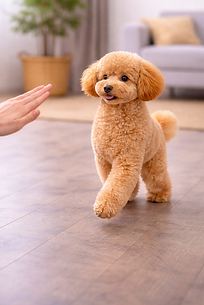
This trick teaches the dog to walk between the owner’s legs while the person is moving. It’s very eye-catching and shows coordination and connection. Objective: The dog should: move between your legs, do it while you are walking, keep pace with you.

How to teach it step by step.
1. Start without walking. Stand still with your legs slightly apart.
2. Use a treat. Guide the dog between your legs with your hand.
3. Mark and reward. When the dog passes through correctly: say “Good!” and reward immediately.
4. Repeat several times. This helps the dog understand the path.
5. Add movement. Start taking slow steps. Guide the dog between one leg, then the other.
6. Add the cue. Once the dog does it well: say “through” or “zigzag” just before the movement. Recommended signal: Word: “through” / “zigzag”. Gesture: guide with your hand between your legs.. How long to practise: Keep sessions short, movements slow, and don’t rush. ⚠️ Common mistakes: Going too fast → the dog loses coordination. Opening your legs too wide → the dog loses the reference point. Forcing the movement → confusion. Repeating too much → fatigue. Key tip: Precision first, speed later.
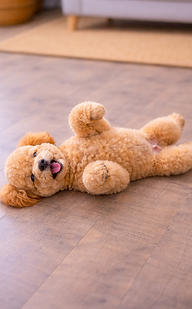
Play dead.
This trick teaches the dog to lie on its side and stay still, as if it were “dead.” It’s very eye-catching and fun, perfect for games and demonstrations. Objective. The dog should: lie on its side, remain still, hold the position for a few seconds.
How to teach it step by step.
1. Start from “down”. The dog should be relaxed.
2. Use a treat. Place it close to the dog’s nose.
3. Guide to the side. Slowly move your hand to one side. The dog will turn its body and lie on its side.
4. Mark and reward. As soon as the dog is lying on its side: say “Good!” and reward immediately.
5. Add duration. Wait 1–2 seconds before rewarding.
6. Repeat several times. This helps the dog understand the position.
7. Add the cue. Once the dog does it well: say “dead” or “bang”, just before the gesture. Recommended signal: Word: “dead” / “bang”. Gesture: hand shaped like a “pistol.” How long to practise: Keep sessions short, with few repetitions, and always positive. ⚠️Common mistakes: Not guiding the movement clearly → the dog stays in a normal down position. Forcing the position → discomfort. Not working on duration → the dog gets up too quickly.. Repeating too much → loss of interest. Key tip: Teach a release cue too. For example: “up” to get back on its feet.